
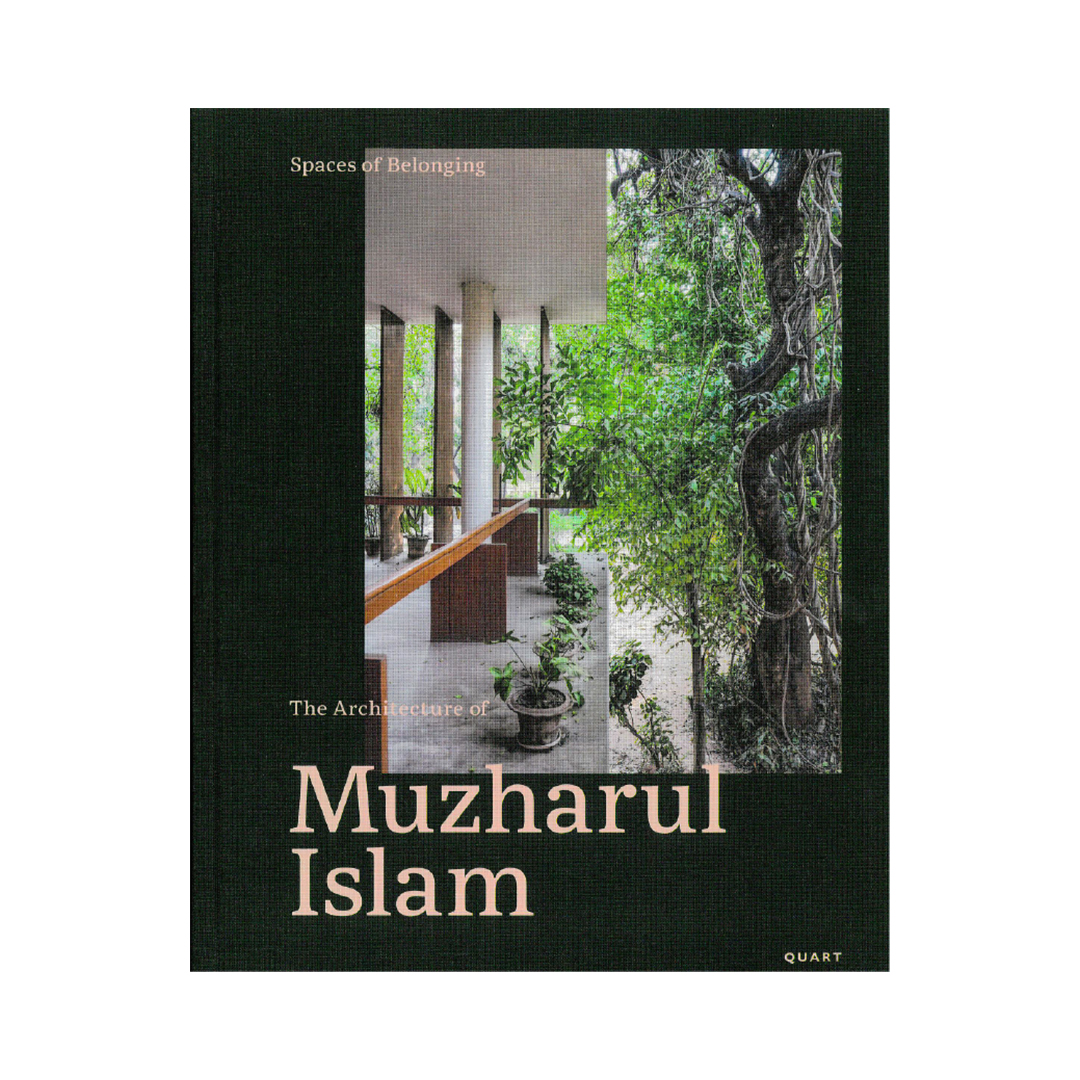
Spaces of belonging. The architecture of Muzharul Islam
Niklaus Graber (ed.)
Note from the editor:
« Muzharul Islam (1923–2012) has left behind an outstanding architectural legacy in Bangladesh, with a significance reaching far beyond the temporal and geographical horizons of its creation. Yet until now, his work has remained relatively unknown despite its relevance and singularity. This monograph presents numerous photographs and reproductions of detailed original drawings to introduce a series of unique buildings to an international audience, highlighting the Bengali architect’s way of thinking and actions, as well as his engagement in cross-cultural dialogue. Contributions by practising architects from different continents present multifaceted perspectives on Islam’s work, placing him within a historical context and global interconnections. Muzharul Islam’s pioneering and timeless works address burning issues that are currently shaping the global architectural debate: climate-sensitive and self-sufficient construction, social engagement and overcoming colonial mindsets are all fields that the architect pursued relentlessly since the beginning of his career in the 1950s. The oeuvre of Muzharul Islam manifests that architecture, with nothing more than its core tools of space, structure and tectonics, has effective levers at its disposal to support positive change. Through a subtle balance of pragmatism and poetics, the architect managed to create inclusive spaces of belonging. »
/informations
| Poids | 2.1 kg |
|---|---|
| langue | |
| Type de produit |
CHF 98.00


/commande
L’article que vous recherchez n’est pas dans notre assortiment? Notre équipe le commandera volontiers pour vous.